
Python Programming and Machine Learning Crash Course
-
Intro
-
Schedule
-
Preparation
-
Day 1
-
Day 2
-
Day 3
-
Day 4
-
Related Tutorials
Information
| Course Code | ARIT1507 |
| Last updated | September 6, 2026 |
| Keywords | |
| Primary study | Master |
| Secondary study | BK Master |
Responsible
| Teachers | |
| Faculty |
Python Programming and Machine Learning Crash Course 0/7
Python Programming and Machine Learning Crash Course
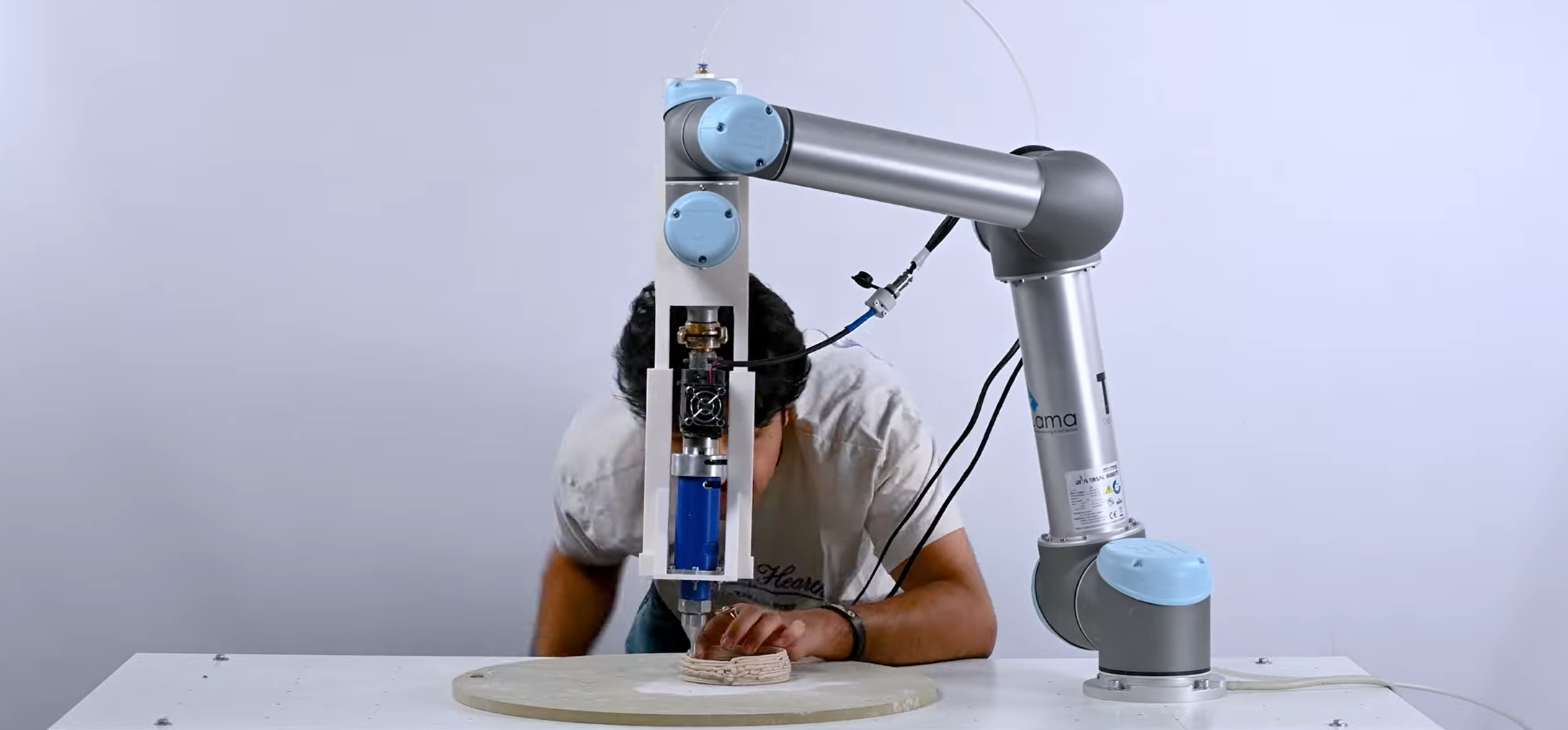
This tutorial was developed for Creative Robotics in Spatial Design, an interdisciplinary MSc course taught at the Faculty of Architecture and the Built Environment, in collaboration with the faculties of Industrial Design Engineering and Mechanical Engineering.
One of the modules of the course introduces students to fundamental programming skills using Python. It covers the basic concepts and methods, as well as the main libraries used in the course. The aim is to provide a starting point for students, so they can start using programming to develop robotics applications and improve their skills further.
Python Programming and Machine Learning Crash Course 1/7
Schedule
Schedule
| Schedule | Workshop Content | Learning Objectives | Required Before Workshop |
| Preparation |
Preparing the Python programming environment before the course starts |
|
Primary in VS Code:
Alternative in Google Colab: |
|
Day 1 |
Introduction to Python
Functions and Classes
|
|
|
|
|
|
||
|
|
|
||
|
Day 2 |
Conditional Statements and Loops
Popular Python Libraries
|
|
|
|
Day 3
|
Introduction to Computer Vision
Git Workflow
|
|
|
|
Day 4
|
Reinforcement Learning
Python for Grasshopper
|
|
Python Programming and Machine Learning Crash Course 2/7
Preparation
Preparation Tutorial
This preparation tutorial is required before starting the course. You will:
- Install Python programming and required packages/libraries needed for the course,
- Create and launch a Jupyter Notebook to write and run code,
- Import datasets into Jupyter Notebook for analysis and modelling.
Complete this tutorial below:
Python Programming and Machine Learning Crash Course 3/7
Day 1
Day 1 aims to boost your confidence with programming. It is good for absolute beginners with no prior background in Python or existing Python users who wish to have a refresher over the basic concepts.
Following this day’s workshops, you will be introduced to Python basics (data types, lists, variables, mathematical operations and basic operations) and learn about functions and classes (defining function input/output arguments and class methods and attributes).
Below are the links to the workshops scheduled for day 1. Please also download the dependency files and keep them in one folder (without subfolders).
Python Programming and Machine Learning Crash Course 4/7
Day 2
Day 2 builds on your existing understanding of Python to create complex programs using your own functions and external functions imported as libraries.
Following this day’s workshops, you will learn about conditional statements and loops (if / elif / else statements, for-loop / while-loop, iteratively append items to lists) and get familiar with popular Python libraries (NumPy, Matplotlib, Pandas).
Below are the links to the workshops scheduled for day 2.
Python Programming and Machine Learning Crash Course 5/7
Day 3
Day 3 builds on your understanding of functions and classes, statements and loops, and Python libaries.
Following this day’s workshops, you will be introduced to Computer Vision (overview of existing vision models, practical object detection and segmentation concepts, zero-shot learning of pre-trained vision models, fine-tuning of vision models) and work with Git workflow (version control, remote server setup).
Below are the links to the workshops scheduled for day 3.
Dependency files for workshops 3 & 4
Download Dependency files (for Workshops 3 & 4)
Dependency files (for Workshops 3 & 4) (ZIP, 18 MB)
Python Programming and Machine Learning Crash Course 6/7
Day 4
Day 4 is the final day of this course and builds on everything you’ve learned so far.
Following this day’s workshops, you will learn about Reinforcement Learning (Markov decision process, value iteration, policy iteration, and Q-learning) and use Python for Grasshopper (creating scripts and using Hops to run them).
Below are the links to the workshops scheduled for day 4.
Python Programming and Machine Learning Crash Course 7/7
Related Tutorials
Write your feedback.
Write your feedback on "Python Programming and Machine Learning Crash Course"".
If you're providing a specific feedback to a part of the chapter, mention which part (text, image, or video) that you have specific feedback for."Thank your for your feedback.
Your feedback has been submitted successfully and is now awaiting review. We appreciate your input and will ensure it aligns with our guidelines before it’s published.